


.svg)



Your work exists for a reason. Does that reason come through when someone encounters your brand?
Your team knows the need you saw, the people you serve, and the choices that make your work meaningful. But someone encountering your organization for the first time has none of that context.
They have your website, a presentation, a social profile, or a recommendation followed by a quick search.
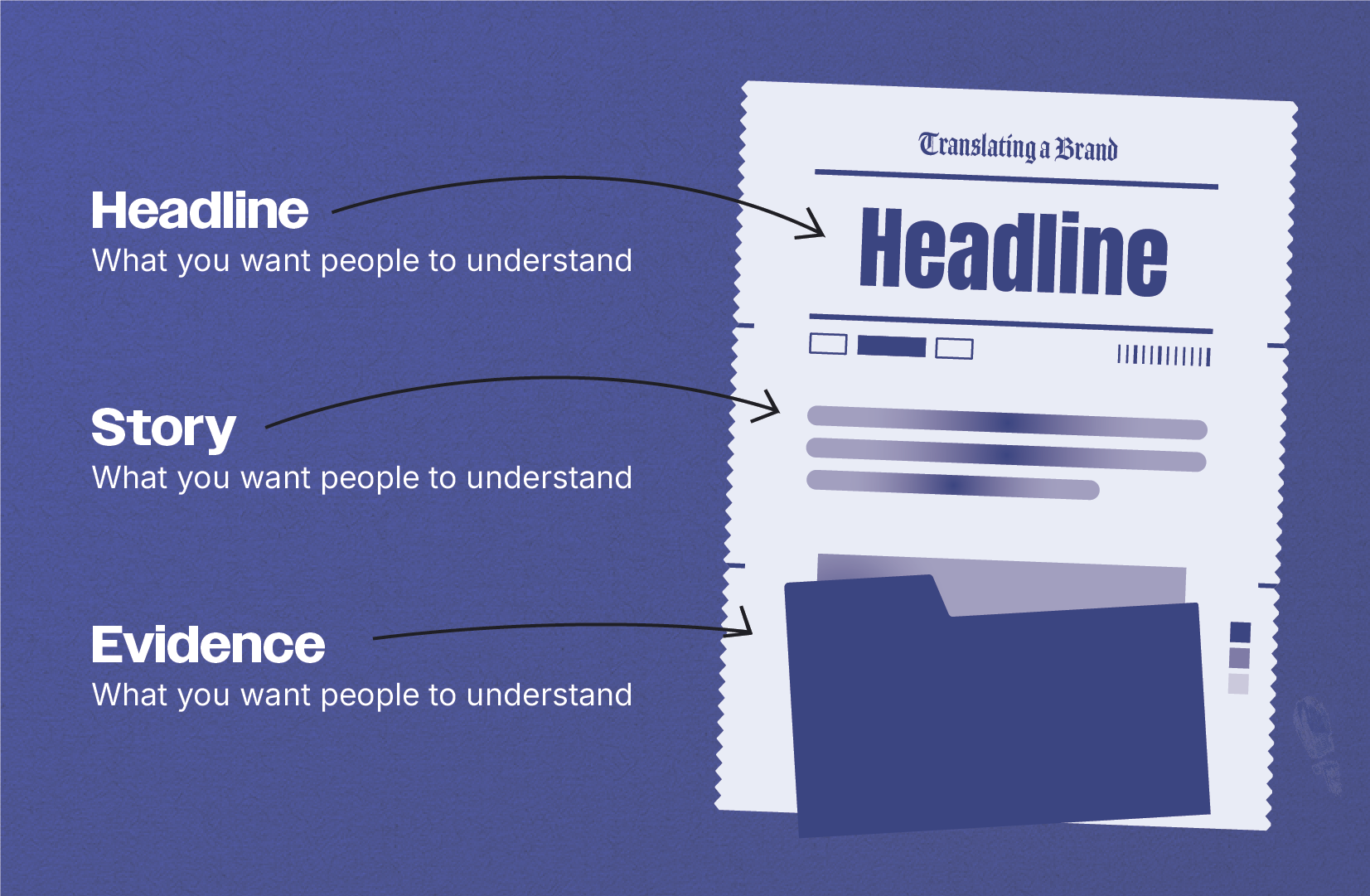
What you do is only the headline. Who you serve and why it matters give it meaning. Your brand should help people understand the story behind the work, not just recognize the name.
That is the gap worth examining: does your presentation simply describe what you offer, or does it help people understand why the work matters to them?
Your Story Is More Than How You Started
A founding date and a few milestones can explain your history. They do not tell the whole story.
Your brand story also includes the need you respond to, the people you are here for, the beliefs that guide your choices, and the difference you are working toward. Your mission is the purpose connecting those pieces.
For a business, that purpose might be making a complicated service easier to use. For a community organization, it might be helping people access support. It does not have to sound grand. It has to be meaningful and true.
Consider a hypothetical consulting business that describes itself as providing “innovative solutions for a changing world.” That could mean almost anything. The team might do exceptional work, but the description gives a prospective client very little to recognize
“We help small teams simplify their operations so they can spend more time serving their customers” gives the reader something more concrete.
The second statement connects the work to the people it helps and the reason it matters.
Clear brand storytelling is not a longer About page. It is a consistent explanation of what you do, why you do it, and where your audience fits.
Start With Purpose, People, and Proof
To make a mission tangible, I would start with three questions. Together, they move the story beyond a statement of good intentions:
Purpose: Why Does This Work Need to Exist?
Name the problem you believe is worth solving, in language your audience would use.
A service list describes what you offer. Your purpose explains why those services matter. Connect the work to the need it addresses without promising outcomes you cannot support.
You do not need an elaborate mission statement. You need a clear reason for the work and choices that reflect it.
People: Who Is the Story For?
A brand story should give your audience a place in it. Start with their situation, not only your achievements.
What are they trying to accomplish? What gets in their way? What would useful support look like to them? Those details help people recognize why your mission applies to their lives or work.
You can still share your experience and point of view. Explain them through the people you serve: why your process accommodates their constraints, how your expertise addresses their needs, or what your approach makes easier.
Your audience should be able to see themselves in the story, not simply admire the organization telling it.
Proof: How Does Your Mission Show Up in Practice?
A mission becomes believable through the decisions and actions behind it.
A relevant project, an approved testimonial, a clear explanation of your process, or a useful resource can show how your purpose shapes the work.
A claim like “We make complex information easier to understand” becomes more convincing when someone can see the original problem and the decisions that improved it
Let the Design Carry the Story
Words are only part of the presentation.
Typography, photography, color, layout, and the way information is organized all contribute to how the business comes across. The question is whether those choices support the message you want to communicate.
If you describe your service as straightforward but your website feels difficult to navigate, there is a mismatch. If personal relationships are central to the work but your materials contain no sense of the people involved, an important part of the story may be missing.
That does not mean every brand needs to look expensive, minimal, or serious.
A neighborhood organization can feel warm and informal while presenting its work with care. A technical business can feel precise without becoming cold. A playful brand can still make its services and next steps easy to understand.
The aim is an appropriate expression of the business, not a universal version of “professional.”
For the distinction between the individual elements and the larger system, see why branding is more than a logo.
Tell the Same Story Across the Places People Meet You
Open your website, your most recent proposal, and your social profile side by side.
Do they communicate the same purpose, and make it clear who you are here for?
They do not need identical layouts. But someone moving between them should encounter a recognizable voice, visual identity, and explanation of what you offer.
Look for practical inconsistencies:
- A website that highlights services you no longer prioritize.
- A proposal with a stronger explanation of your value than your homepage.
- Different team members describing the business in conflicting ways.
- Photography or project examples that no longer reflect your current work.
- Materials that use different versions of the identity without a clear reason.
Sometimes the best starting point is already inside your organization. The language you use in a successful client conversation may be clearer than the copy you published years ago.
Show Your Mission Through the Work
You do not have to repeat your mission in every paragraph. Show where it changes a decision.
If your mission emphasizes access, explain how you made information easier to find or understand. If it emphasizes personal service, show what that means in your process. Use real, approved examples instead of broad promises.
For example, instead of saying a project was “strategic,” explain whose needs shaped it and how those needs influenced the work.
That is the value of a well-developed project story. It connects the presentation to the thinking behind it.
Be equally careful with testimonials and results. Use approved, accurate material. A small, specific example is more useful than a dramatic claim you cannot support.
Try a Simple Outside-Perspective Check
Ask someone reasonably close to your intended audience to review your homepage or a key piece of marketing material.
Then ask:
- What do you think we do, and why does it matter?
- Who does our work seem intended to help?
- What gives you a reason to believe the story we are telling?
- What would you still need to know?
Let them answer before you explain.
This is not a formal research study, and one response should not determine your entire strategy. But it can reveal assumptions worth investigating.
The useful moment is often the difference between what you intended to communicate and what the person actually understood.
You May Need Clarity Before You Need a Rebrand
A communication gap does not automatically mean starting over.
You may need sharper messaging, better examples, a more useful homepage structure, or a consistent set of templates. A broader identity project may be appropriate if the business has changed substantially or the existing system no longer fits.
The scope should follow the problem.
That is the principle behind Pablo Studio’s approach to branding and digital design: understand the organization, then determine how to express it clearly.
If your mission is clear to your team but missing from the story your brand tells, tell us where the disconnect is. We can help you work out what needs attention.